
Table of Contents
ToggleTable of Contents
Summary
Most blogs about lab-grown diamond authenticity tell you the same thing: look for an IGI or GIA certificate, check the laser inscription, ask your supplier questions. You have read it. Your competitors have read it. And Google has seen it a thousand times over.
Introduction
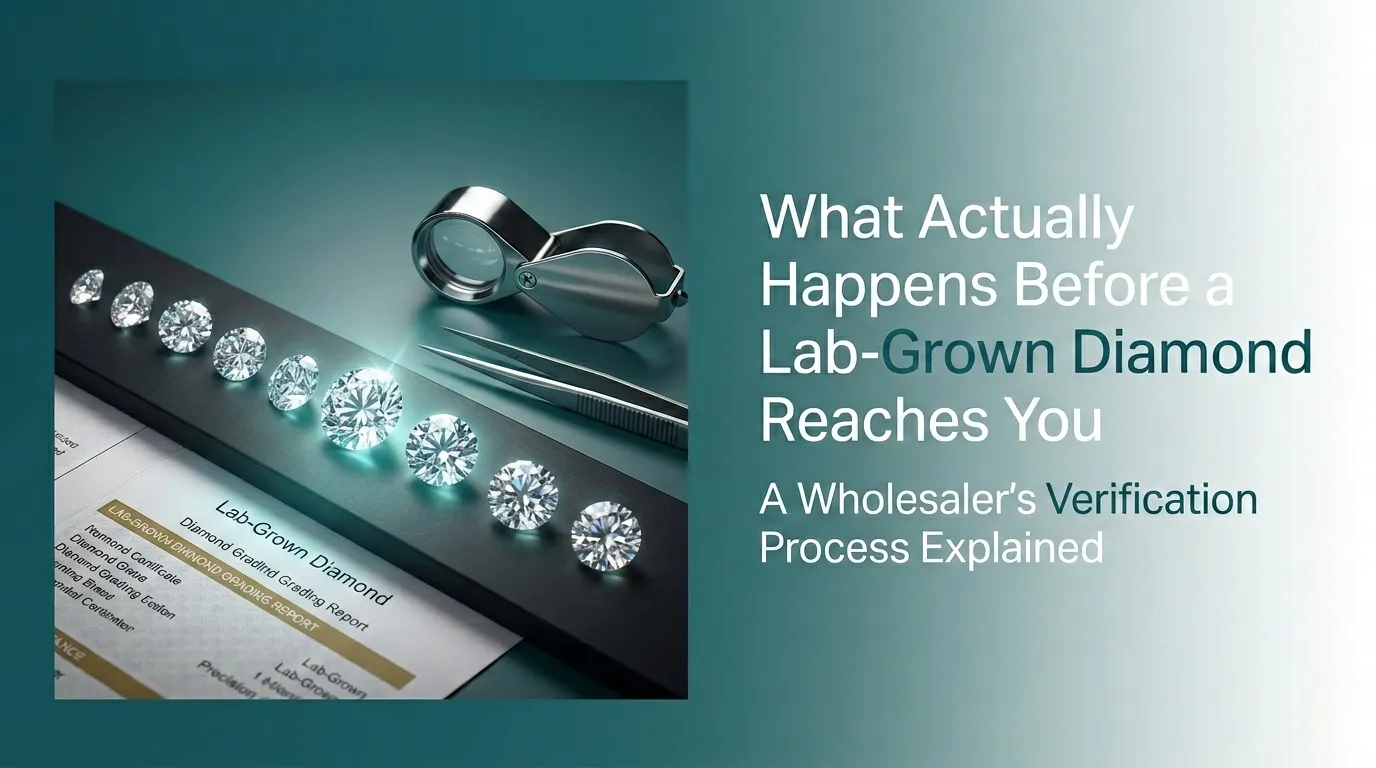
This blog is different. Instead of giving you a generic checklist, we are walking you through what actually happens at our end — the physical checks, the documentation steps, and the decisions we make before a single stone gets packed and sent to a retail jeweller.
Because here is the truth: as a retail jeweller buying wholesale, you cannot always be in the room when diamonds are verified. You are trusting your supplier’s process. That is a big ask. So you deserve to know exactly what that process looks like — not in vague terms, but in practical, step-by-step detail.
That is what this blog gives you.
First, Let's Be Clear About What 'Genuine' Actually Means
A lot of retail jewellers come to us having heard confusing things. Is a lab-grown diamond real? Is it the same as cubic zirconia? Does ‘lab-grown’ mean lower quality?
A lab-grown diamond is chemically identical to a mined diamond. Same carbon structure. Same hardness. Same brilliance. The only difference is where it was grown — inside a controlled laboratory rather than deep inside the earth. A trained gemologist cannot tell them apart without specialised equipment.
Cubic zirconia and moissanite are completely different materials. They are simulants — stones that look like diamonds but are made of entirely different substances. They do not pass a diamond tester. They are not diamonds.
When we say ‘authenticity verification,’ we mean confirming that what you are buying is a real diamond — grown in a lab, yes, but a diamond in every meaningful sense — and that the grade on its certificate accurately reflects the actual stone in hand. That second part matters just as much as the first.
Why This Matters More Than You Might Think for Retail Jewellers
When you sell a diamond to a customer, you are putting your name behind it. If something is wrong with that stone — if it was misrepresented, if the grade does not match, if it is not a diamond at all — the person who faces the customer is you, not the wholesaler.
This is the part that does not get discussed enough. The risk in the supply chain does not sit equally across all parties. It tends to land hardest at the retail end.
We have spoken to retail jewellers who received stones with certificates that did not match the actual stone on inspection. We have heard about batches where the colour grade was inflated by one or two grades — barely noticeable to an untrained eye, but significant in terms of value. And we have seen certificates from unfamiliar labs that could not be verified through any official channel.
The solution to all of this is a supplier with a verification process you can trust and understand. Which brings us to what we actually do.
Our In-House Verification Process: What Happens Before a Stone Reaches You
As a lab-grown diamond jewellery wholesaler, we do not simply receive stones and pass them on. Every batch goes through a set of checks at our end before it enters our inventory. Here is what that looks like in practice.
Step 1: Certificate Intake and Initial Screening
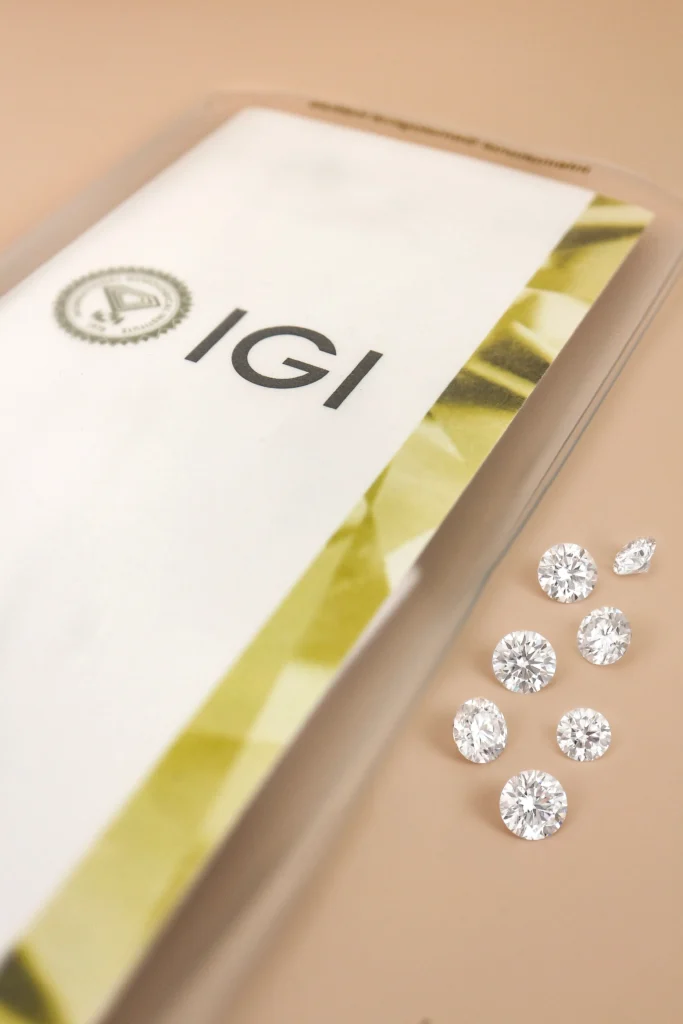
When a batch arrives, the first thing we check is the documentation. Every stone must come with a certificate from a recognised grading laboratory. We work with IGI, GIA, and a small number of other trusted labs whose grading standards we have verified over time through our own testing.
Certificates from labs we do not recognise are not automatically accepted. If a stone arrives with unfamiliar documentation, it goes into a hold queue and is not added to our inventory until we have done further checks or obtained a re-grade from a lab we trust.
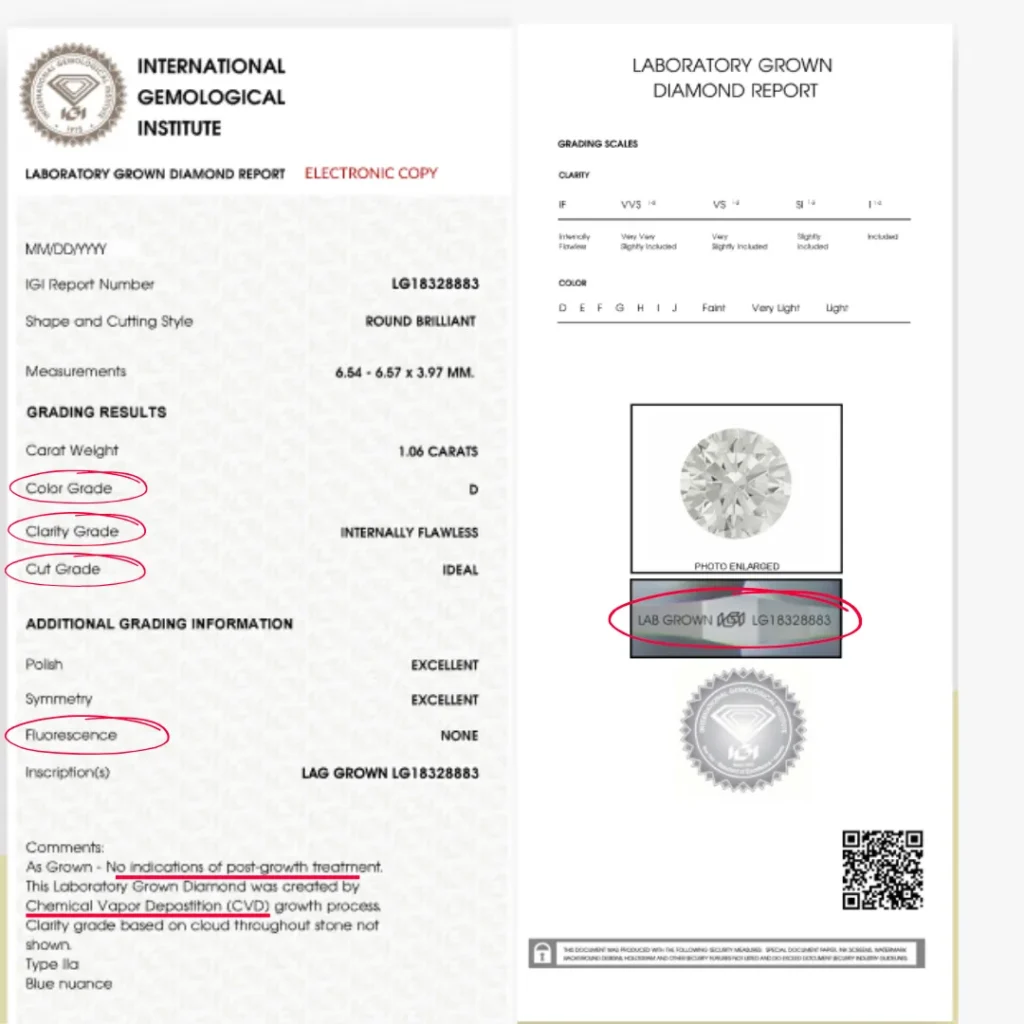
At this stage, we also log each certificate number and cross-reference it against the issuing lab’s online portal. A real IGI or GIA certificate can be verified in under sixty seconds. If it does not appear in the portal, or if the details on the portal do not match the physical certificate, the stone does not move forward.
Step 2: Physical Girdle Inscription Check
This is the step that many buyers do not think to do themselves — but it is one of the most reliable physical verification checks available.
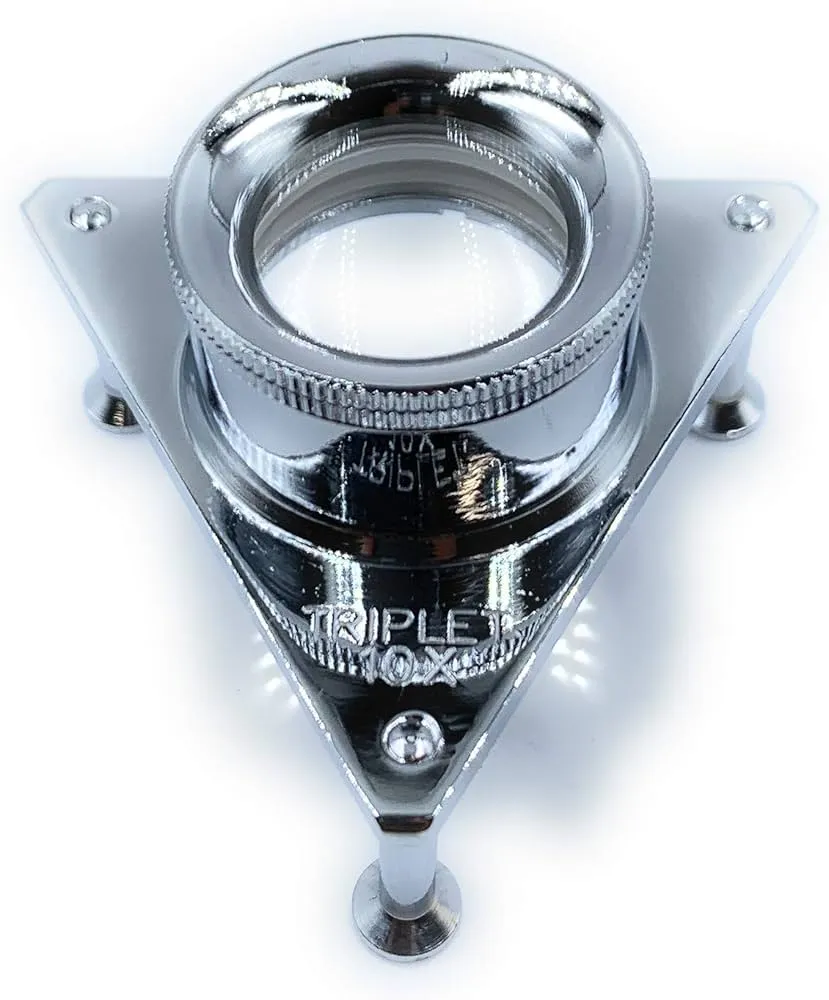
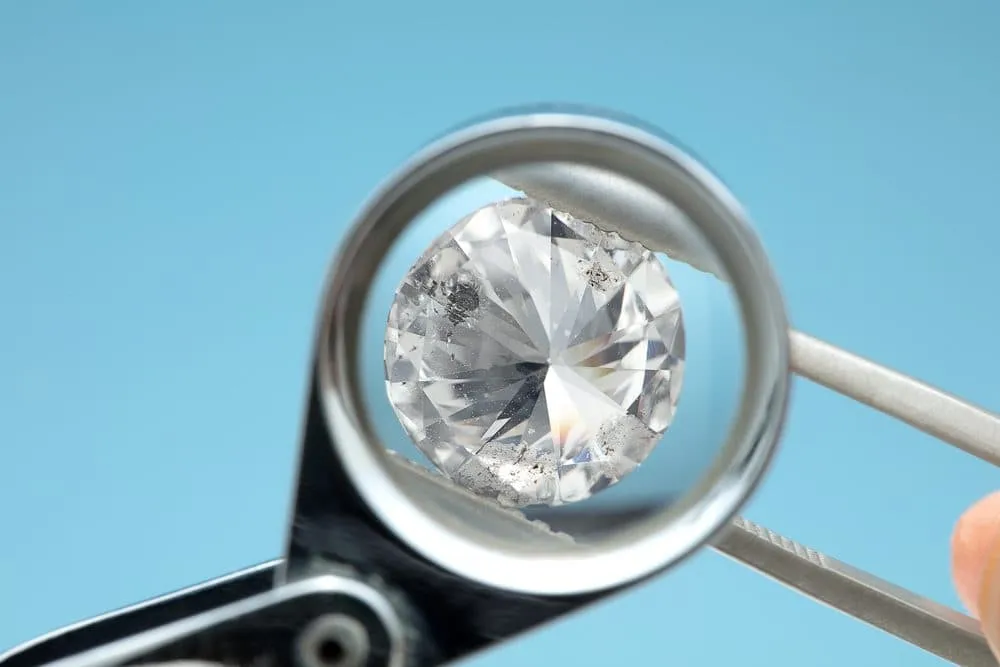
Every certified lab-grown diamond should have a laser inscription on its girdle — the thin outer edge of the stone. This inscription is invisible to the naked eye but clearly readable under 10x magnification. It typically includes the certificate number and the words ‘lab grown’ or ‘lab created.’
We check every stone under a loupe to confirm three things: first, that an inscription is present; second, that the inscription matches the certificate number exactly; and third, that the origin disclosure is clearly present.
A stone with no inscription, or with an inscription that does not match its paperwork, does not pass this stage. Full stop.
We also use this check as an opportunity to spot any stones that may have been switched after grading — a rare but documented issue in the supply chain. If a stone’s physical characteristics do not align with its grade on inspection, it is flagged for a second review.
Step 3: Growing Method Disclosure Check
Lab-grown diamonds are produced using one of two methods: CVD (Chemical Vapour Deposition) or HPHT (High Pressure High Temperature). Both produce real diamonds. But the growing method affects certain characteristics of the stone and is important information for buyers to have.
We confirm that each certificate clearly states the growing method. We then disclose this to you the retail jeweller, in our product listings and invoices. This means you can pass accurate, complete information on to your customers, which protects you legally and builds trust with the people buying from your counter.
Step 4: Final Inventory Check Before Dispatch
Before any order is packed for dispatch, we do a final check. The stone is matched to its certificate one more time. The certificate number, the carat weight, the colour and clarity grade, and the growing method are all confirmed against the stone being packed.
This last step exists because mistakes happen. Stones can be mislabelled during storage. Certificates can be misattributed. A final check catches any errors before they leave our hands and become your problem.
Industry Standards That Give This Process Meaning
Our verification process exists within a broader framework of industry standards.
In the United States, the Federal Trade Commission (FTC) requires that lab-grown diamonds be clearly disclosed as such at the point of sale. Sellers cannot call them simply ‘diamonds’ without disclosing their origin. Any wholesaler operating with integrity builds this disclosure into every document they produce.
The World Jewellery Confederation (CIBJO) provides global standards for responsible disclosure and ethical trade across the diamond and jewellery sector. Aligning with these standards is not just about compliance — it is about being part of a supply chain that retail jewellers and their customers can actually trust.
When you work with a wholesaler who takes these standards seriously — not just as a minimum requirement but as a baseline to go beyond — you are protecting your business at every level.
Conclusion
Lab-grown diamonds are only as trustworthy as the supplier standing behind them. As a retail jeweller, your reputation is built stone by stone — and that means every diamond you sell needs to be exactly what it says it is.
At Auramentwholesale, we don’t ask you to take our word for it. Our four-step in-house verification process — certificate intake, girdle inscription check, growing method disclosure, and final dispatch confirmation — means every stone that reaches you has been checked, documented, and confirmed before it ever leaves our hands.
You focus on your customers. We handle the verification. Contact Auramentwholesale today and speak directly with our team about your requirements.