
Table of Contents
Introduction
India cuts and polishes over 90% of the world’s diamonds. But here is what most people do not realise — India is also home to some of the most trusted diamond jewellery exporters on the planet. Whether you are a retailer in Delhi, a luxury brand in Mumbai, or a wholesaler in Surat, there is a very good chance the diamonds in your showcase were shaped, polished, and set right here in India.
So, what makes India so special? Why do buyers from over 100 countries — and crores of Indian customers — consistently choose India as their primary source for diamond jewellery? The answer lies in a combination of deep-rooted craftsmanship, competitive pricing, strong industry standards, and unmatched production capacity. In this blog, we break it all down — in simple, clear words that any buyer or sourcing professional can understand and act on.
India's Diamond Industry
India’s relationship with diamonds is ancient. Long before South Africa or Russia became known diamond sources, India was the world’s only known supplier of diamonds — a legacy that stretches back more than two thousand years. Diamonds from Indian rivers were treasured by kings and emperors, traded along ancient routes, and eventually found their way into the royal courts of the world.
Today, that legacy has transformed into a modern, globally connected industry. India now dominates not just the cutting and polishing of diamonds, but also the crafting and export of finished diamond jewellery. The country’s gem and jewellery exports are valued at approximately ₹3.2 lakh crore, and the Indian government has set an ambitious target of reaching ₹5.8 lakh crore in jewellery exports in the coming years.
Three cities sit at the heart of this industry, each with its own area of strength:
- Surat — The diamond cutting and polishing capital of the world. Over 80% of the world’s polished diamonds pass through this city.
- Mumbai — The financial and trading hub of India’s diamond trade, home to major exchanges and export companies.
- Jaipur — Famous for coloured gemstones and handcrafted jewellery, a favourite among designers seeking artistic, one-of-a-kind pieces.
Together, these three cities form an ecosystem that no other country has fully replicated. This is a market built on generations of skill, institutional knowledge, and long-standing global relationships.
Why Buyers and Brands Trust Indian Diamond Jewellery Exporters
Trust is the foundation of every jewellery business. When you are dealing with high-value products that will be worn and cherished for a lifetime, the reliability of your supplier matters enormously. So why do thousands of buyers across India and around the world — year after year — continue to return to Indian exporters?
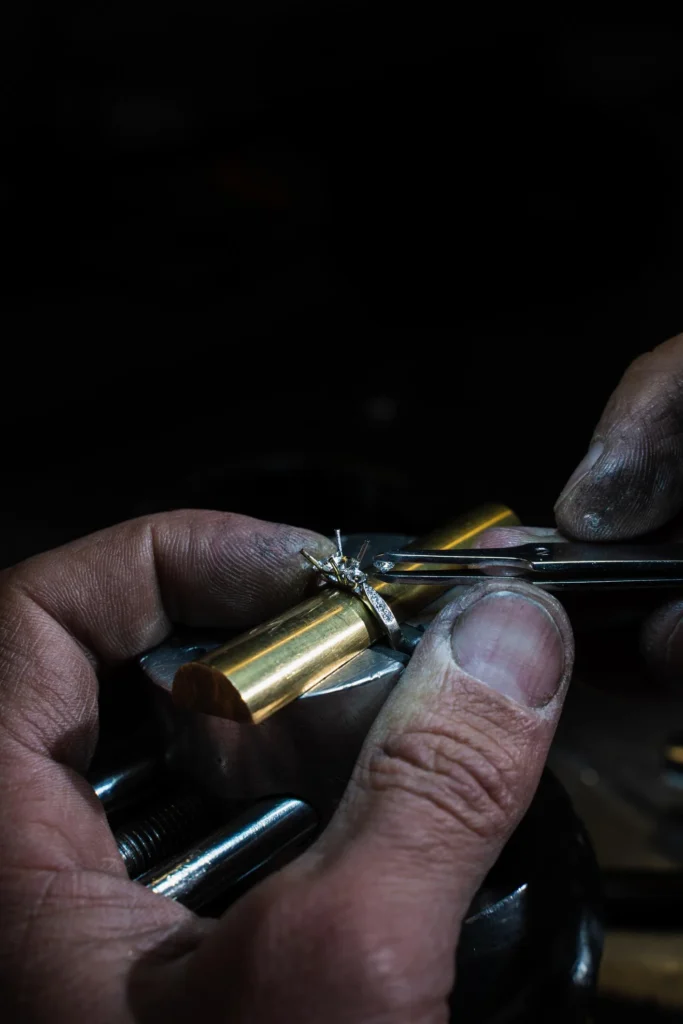
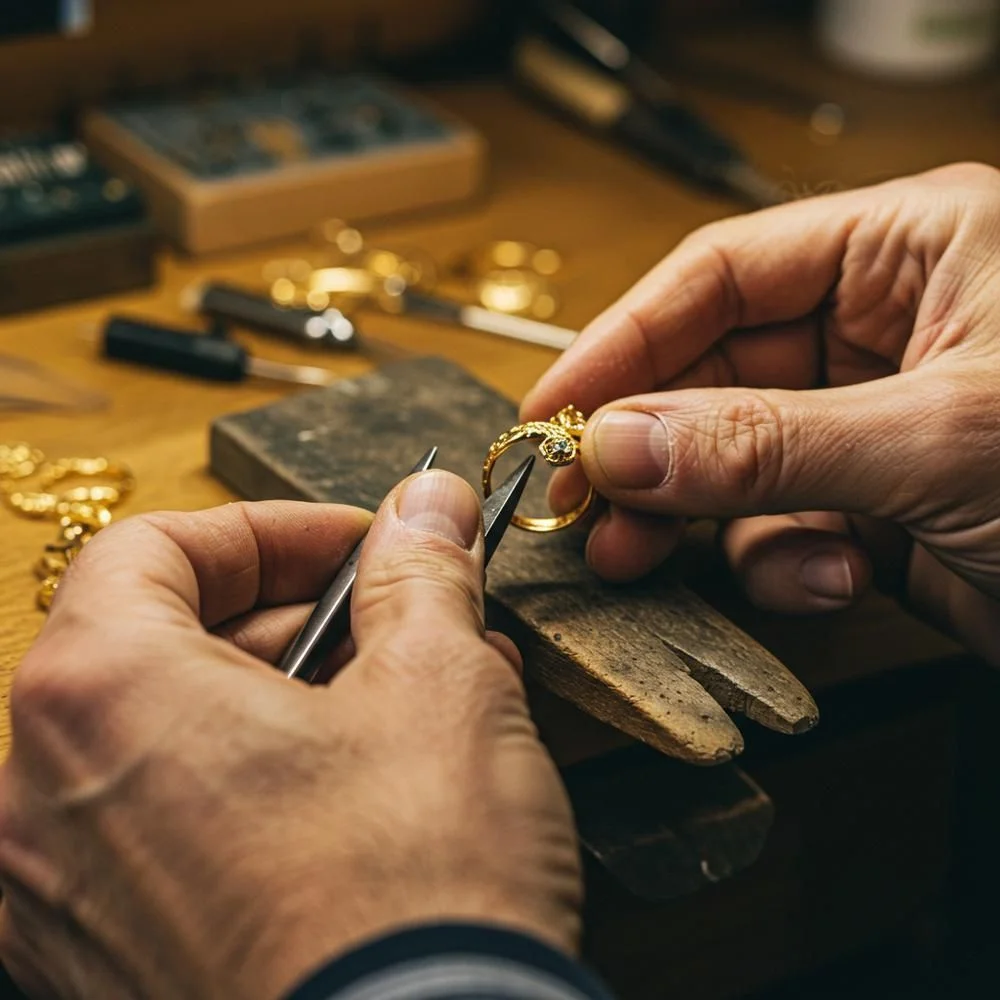
The first reason is craftsmanship. Indian artisans have been making jewellery for centuries. This skill is not learned in a classroom — it is passed down from parent to child, generation after generation. The result is a level of precision and artistry that is genuinely difficult to find elsewhere. From delicate filigree work to precision stone-setting, Indian craftsmen bring a patience and mastery that reflects centuries of practice.
The second reason is quality at an accessible price. A well-crafted diamond ring from an Indian manufacturer may be priced between ₹25,000 and ₹2 lakh depending on the carat, cut, and metal — far more competitive than comparable pieces sourced from European or Western suppliers. Buyers consistently find that they get far more value for every rupee they spend when sourcing domestically or from within the Indian export ecosystem.
The third reason is variety. Indian exporters offer an extraordinary range — from simple, elegant solitaire rings to bold, statement necklaces. Whether your market prefers classic designs or contemporary styles, Indian manufacturers can deliver. This breadth of offering means you can serve multiple customer segments from a single supplier relationship.
Beyond craftsmanship and variety, reputable diamond jewellery exporters in India also follow strict international quality standards, including:
- BIS hallmarking for gold purity verification
- Kimberley Process (KP) certification confirming conflict-free diamond sourcing
- IGI and GIA grading reports for diamond quality transparency
The Real Advantages of Sourcing from India
Belgium, Israel, and Dubai are also recognised diamond hubs. Each has its strengths. So why do so many businesses — from small Indian boutiques to global retail chains — still choose India as their primary sourcing destination? The answer is straightforward: India offers more, across more dimensions, than any other market.
Pricing is perhaps the most obvious advantage. A finished diamond jewellery piece that might cost ₹5 lakh when imported from a European supplier can often be sourced from an Indian manufacturer for ₹2.5 to ₹3.5 lakh — with the same or better quality. For Indian businesses operating on tight margins, this difference directly impacts profitability and pricing power in the domestic market.
Another major advantage is India’s end-to-end capability. Unlike some markets where you need different suppliers for cutting, polishing, setting, and export, many Indian exporters handle the entire supply chain under one roof. This reduces communication gaps, minimises errors, cuts down lead times, and makes quality control far more consistent. For a buyer, this means fewer headaches and more predictable outcomes.
Flexibility is another area where India stands out. Whether you need 10 custom pieces for a boutique in Connaught Place or 10,000 units for a retail chain across India, Indian manufacturers can accommodate you. This ability to scale up or down — without losing quality — is genuinely rare in other major markets.
On top of this, India benefits from strong structural advantages that support the entire export ecosystem:
- Established rough diamond import relationships with mining countries like Russia, Botswana, and Canada
- Government export incentives and Special Economic Zones (SEZs) designed specifically for the jewellery industry
- Dedicated gem and jewellery parks that cluster manufacturers, traders, and logistics providers in one place
What Makes a Reliable Diamond Jewellery Exporter in India?
Not every exporter is equal. India’s jewellery industry is vast, and while it is home to many excellent, trustworthy suppliers, it is also important to know how to identify the right partner. For first-time buyers especially, taking a little time to verify credentials upfront can save a great deal of trouble — and money — later.
The most important body to look for is membership in the GJEPC — the Gem and Jewellery Export Promotion Council of India. This is the apex body that governs and promotes India’s gem and jewellery exports. A registered GJEPC member has met defined standards and is part of a regulated community. You can verify membership directly on their official website, which is a simple and reliable first step.
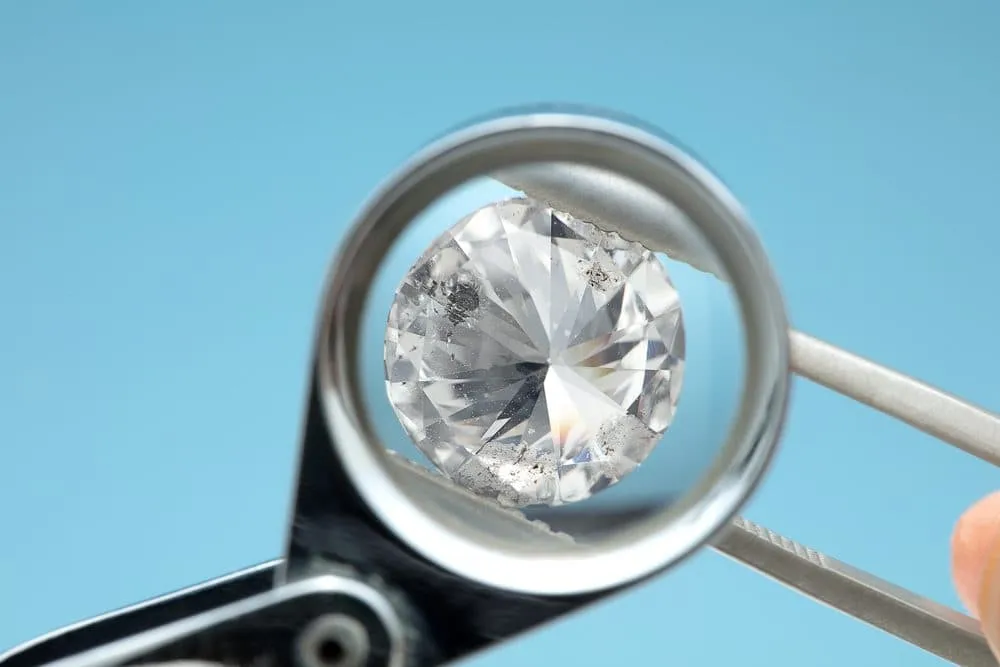
Beyond GJEPC membership, you should look for diamond certifications from globally recognised labs. GIA (Gemological Institute of America), IGI (International Gemological Institute), and HRD (Hoge Raad voor Diamant) are the three most trusted names. A credible diamond jewellery exporter will have no hesitation providing grading reports for the stones they sell. For the Indian market specifically, IGI-certified diamonds are extremely common and widely accepted by buyers and end consumers alike.
Here are a few quick checks that can help you evaluate a potential exporter:
- Ask for Kimberley Process documentation to confirm conflict-free sourcing
- Request references from at least two past buyers — Indian or international
- Check for a verifiable physical address, trade history, and clear communication style
On the other hand, be cautious of exporters who cannot provide certifications, give vague answers about diamond origins, or quote prices that seem unusually low. If someone is offering a certified 1-carat solitaire ring for ₹30,000 when the market rate is ₹1.2 lakh or more, that is a clear warning sign.
India's Export Markets
India’s diamond jewellery reaches virtually every corner of the world. The United States remains the single largest international market, absorbing a significant share of India’s total jewellery exports. The UAE, Hong Kong, Belgium, and the United Kingdom are also among the top destinations. But within India too, demand is growing steadily — the domestic jewellery market is estimated to be worth over ₹6 lakh crore, making it one of the largest in the world.
The buyer base is equally diverse. Large retail chains source finished, ready-to-sell pieces in high volumes. Luxury brands commission custom-designed collections that reflect their unique aesthetic. Independent boutiques look for unique, handcrafted pieces that set them apart from mass-market competitors. E-commerce jewellery businesses need consistent quality at scale to meet the demands of online shoppers who are increasingly comfortable buying diamond jewellery in the ₹15,000 to ₹5 lakh range online.
What is particularly exciting is the growth of Tier 2 and Tier 3 cities within India. Towns like Indore, Coimbatore, Lucknow, and Nagpur are showing strong and rising demand for diamond jewellery as incomes grow and aspirations rise. Indian exporters and manufacturers are well-positioned to serve this demand — thanks to their ability to offer premium quality at accessible price points.
Challenges Faced by Diamond Jewellery Exporters
No industry is without its challenges, and being honest about the difficulties is part of giving you a complete picture. Understanding these challenges also helps buyers plan better and set realistic expectations when working with Indian exporters.
Rough diamond price volatility is one of the most persistent challenges. The cost of rough diamonds fluctuates based on global supply and demand, mining output, and geopolitical events. When rough prices rise — sometimes by 10 to 20% within a single quarter — the impact flows through the entire supply chain and affects the final retail price of finished jewellery in the Indian market as well.
Ethical sourcing compliance is another growing area of focus. Indian buyers — especially younger consumers in metro cities — increasingly ask whether their diamonds are conflict-free and responsibly sourced. Exporters must stay current on Kimberley Process requirements and newer traceability frameworks that are fast becoming the industry standard globally.
Two more operational challenges are worth noting:
- GST and import duty complexity: Diamond jewellery in India attracts GST at 3% on the final product, and rough diamond imports carry their own duty structures. Navigating this correctly requires expertise, and errors can result in significant financial penalties.
- Currency fluctuations: Since rough diamond purchases happen in US dollars, a weakening rupee — for instance, moving from ₹83 to ₹86 per dollar — directly increases input costs for Indian manufacturers and can put pressure on domestic pricing.
The reassuring news is that established diamond jewellery exporters in India have experienced teams and systems in place to manage these challenges. The key is to work with exporters who are transparent about these factors rather than ones who simply ignore them.
The Future of Diamond Jewellery Export from India
The Indian diamond jewellery export industry is not standing still. It is adapting, innovating, and growing — and the changes happening right now are creating significant new opportunities for both international buyers and Indian businesses.
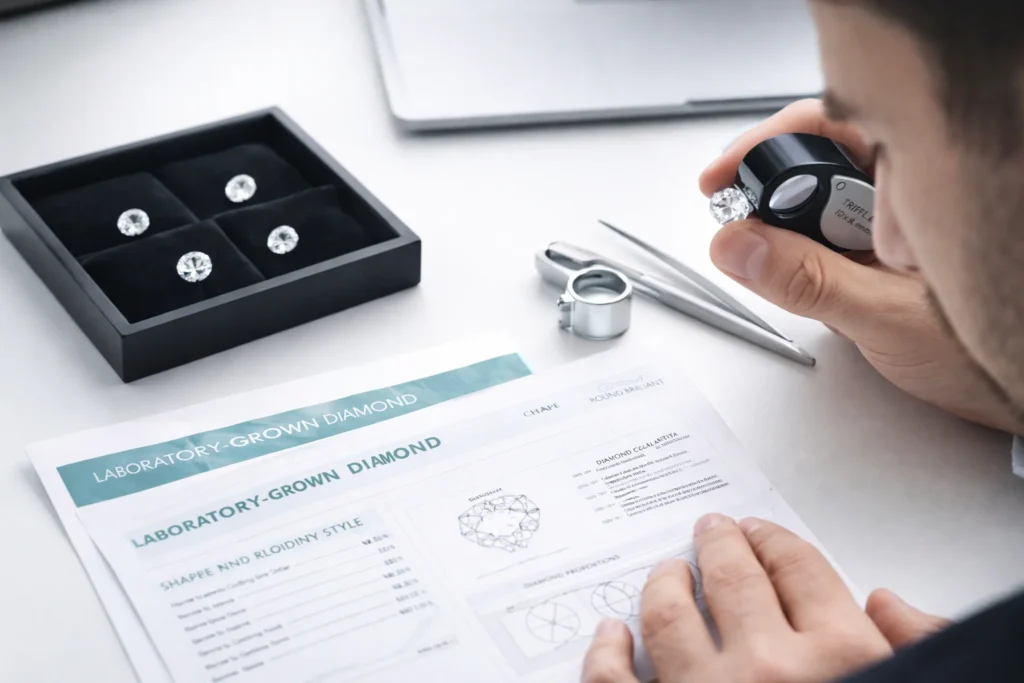
One of the most significant developments is the rise of lab-grown diamonds. India has quickly emerged as a global leader in lab-grown diamond production. A lab-grown 1-carat diamond that might have cost ₹1.5 lakh a few years ago is now available for ₹30,000 to ₹50,000 — making diamond jewellery accessible to a much wider segment of Indian consumers. For brands targeting younger, value-conscious buyers, this is a major opportunity — and India is right at the centre of it.
Digital transformation is also reshaping how buyers and exporters connect. Indian exporters are now accessible through B2B platforms, virtual trade fairs, and direct digital channels. Indian retailers who once had to travel to Surat or Mumbai to place orders can now browse catalogues, request samples, and communicate with manufacturers entirely online. This has made the sourcing process faster, cheaper, and more transparent for everyone involved.
Looking at the bigger picture, two trends are shaping the long-term trajectory of the industry:
- Sustainability and ethical sourcing are becoming non-negotiable — even for Indian consumers. Exporters are increasingly investing in green manufacturing, transparent supply chains, and responsible sourcing to stay competitive.
- The Indian government’s ₹5.8 lakh crore export target is driving major investment in infrastructure, skill development, and international trade agreements — all of which benefit buyers by improving capacity and reducing costs over time.
The Future of Diamond Jewellery Export from India
The Indian diamond jewellery export industry is not standing still. It is adapting, innovating, and growing — and the changes happening right now are creating significant new opportunities for both international buyers and Indian businesses.
One of the most significant developments is the rise of lab-grown diamonds. India has quickly emerged as a global leader in lab-grown diamond production. A lab-grown 1-carat diamond that might have cost ₹1.5 lakh a few years ago is now available for ₹30,000 to ₹50,000 — making diamond jewellery accessible to a much wider segment of Indian consumers. For brands targeting younger, value-conscious buyers, this is a major opportunity — and India is right at the centre of it.
Digital transformation is also reshaping how buyers and exporters connect. Indian exporters are now accessible through B2B platforms, virtual trade fairs, and direct digital channels. Indian retailers who once had to travel to Surat or Mumbai to place orders can now browse catalogues, request samples, and communicate with manufacturers entirely online. This has made the sourcing process faster, cheaper, and more transparent for everyone involved.
Looking at the bigger picture, two trends are shaping the long-term trajectory of the industry:
- Sustainability and ethical sourcing are becoming non-negotiable — even for Indian consumers. Exporters are increasingly investing in green manufacturing, transparent supply chains, and responsible sourcing to stay competitive.
- The Indian government’s ₹5.8 lakh crore export target is driving major investment in infrastructure, skill development, and international trade agreements — all of which benefit buyers by improving capacity and reducing costs over time.
Conclusion
India is not simply a place where diamonds are cut, it is the world’s most complete diamond destination. It combines ancient craftsmanship with modern production standards, competitive pricing with uncompromising quality, and deep industry knowledge with a genuine understanding of what Indian and global buyers truly need.
Whether you are an Indian retailer, a designer launching your own label, or a business owner seeking a dependable supplier, working with a trusted diamond jewellery exporter from India gives you the right quality, the right price, and the right long-term relationship.
The results speak for themselves — better margins, happier customers, and jewellery that genuinely sells.
Ready to grow your jewellery business? Explore India’s finest certified diamond jewellery collection at Auramentwholesale — your trusted sourcing partner, built for serious buyers.